
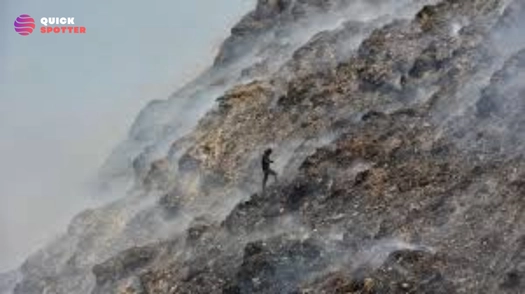
India’s “trash mountains” are deadly signs of how cities don’t care about their trash. Every year, the piles of toxic waste get higher and higher. These “trash mountains” not only block the view in New Delhi’s Ghazipur dump and Mumbai’s Deonar site, but they also put the lives and health of millions of people living nearby at risk.
The Growth of India’s Trash Mountains
Across India, “trash mountains” are a sign of the bad side of fast urbanization. The Ghazipur landfill in Delhi is almost as tall as the Qutub Minar, at over 65 meters. These trash mountain have grown because of years of inadequate waste management and poor segregation systems.
India makes more than 62 million tonnes of solid waste every year, and almost 70% of it ends up in landfills that are already full. Despite repeated warnings, authorities struggle to manage the ever-increasing trash mountain that now threaten nearby communities with fires, air pollution, and poisonous leachate that contaminates groundwater.
Trash Mountains’ Effects on Health and the Environment
The effect of “trash mountains” on public health is very bad. People who live within a few kilometers of these dumps say they have more asthma, skin infections, and breathing problems. Methane emissions from decomposing garbage frequently ignite fires, turning trash mountain into ticking environmental time bombs.
A huge fire at the Bhalswa landfill in Delhi in 2022 burned for days, sending poisonous smoke all over northern India. Environmental experts say that if “trash mountains” keep getting bigger without any action, India could face an ecological crisis that can’t be fixed.
The Central Pollution Control Board (CPCB) did a study that showed landfill fires release toxic gases like dioxins and methane, which are known to make climate change worse and pose long-term health risks. ( Central Pollution Control Board – Solid Waste Management Report)
What the Government Is Doing and What It Is Having Trouble With
India’s “trash mountains” keep getting bigger, even though there are new rules and campaigns like the “Swachh Bharat Mission.” Municipal corporations are trying to build waste-to-energy plants, but they often don’t work because the waste isn’t sorted properly and the technology isn’t up to par.
The government has started pilot projects to turn landfill gas into electricity, but most of the “trash mountains” are still not being managed. Experts say that getting people involved is the most important thing. Even the best technologies can’t stop “trash mountains” from growing if people don’t sort their trash properly at the source.
Life Around the Trash Mountains
For a lot of people who live near these “trash mountains,” they are their only way to stay alive. Every day, thousands of people who don’t work for a company go through trash to find things that can be recycled. They don’t wear gloves, masks, or other safety gear while they work, which puts them at risk of breathing in toxic fumes and coming into contact with dangerous waste.
Kids play very close to these mounds, and during the monsoon, landslides of trash have even killed people. But even in the midst of decay, resilience thrives. Small communities keep rebuilding and hoping for cleaner places to live.
The Road Ahead
Experts say that India needs to take quick action to get rid of its “trash mountains.”
- Make sure that everyone in the house strictly separates their trash.
- Build up the waste-to-energy infrastructure in a responsible way.
- Make sure that landfill caps are followed and that recycling industries are supported.
- Give local communities the tools and motivation they need to succeed. If India acts quickly, its “trash mountains” could be a thing of the past. Instead, it could have modern, long-lasting waste systems that protect both people and the environment.
Read more exciting stories on Quick Spotter